
10 Day Morocco Itinerary: Marrakech, Sahara, Fes & Chefchaouen Google Sheets Template
Matt - August 8, 2026
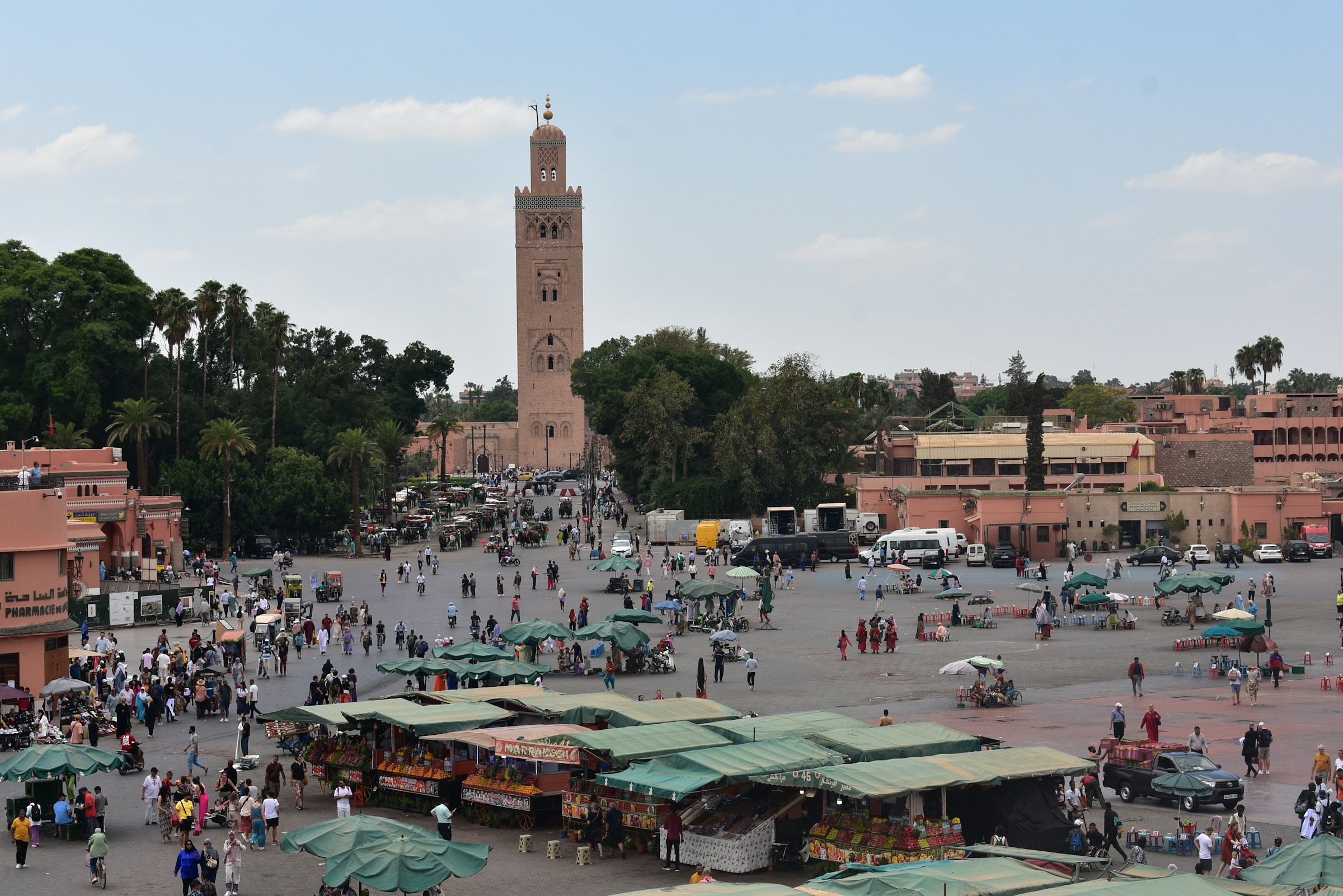
Morocco is a rewarding country for a route that combines cities, mountains, desert scenery, and the Atlantic coast. The same trip can include the courtyards and souks of Marrakech, the earthen ksar of Aït Benhaddou, the Dades and Todra valleys, the dunes of Erg Chebbi, the medina of Fes, the blue streets of Chefchaouen, and Tangier's sea-facing Kasbah.
This 10 day Morocco itinerary is designed for a first trip that covers several sides of the country while still leaving time to explore each base. It uses Marrakech, Aït Benhaddou, the Dades Valley, Merzouga, Fes, Chefchaouen, and Tangier as the main bases. The route includes two long transfer days, so the order matters and the desert section needs enough space.
You can also use the free 10 Day Morocco Itinerary Google Sheets template as a starting point for your own trip. It includes scheduled stops, alternative ideas, lodging, transport, meals, packing, pre-trip tasks, and sample cost-splitting rows. Update the dates, bases, and activities to match your flights and travel style. For a reusable planner beyond this destination, start with the free Google Sheets travel planner template.

Itinerary Outline
- Days 1-2: Marrakech
- Day 3: Marrakech to Aït Benhaddou through the High Atlas
- Day 4: Aït Benhaddou, Ouarzazate, Rose Valley, and the Dades Valley
- Day 5: Todra Gorge and Merzouga
- Day 6: Merzouga to Fes
- Day 7: Fes
- Day 8: Fes to Chefchaouen
- Day 9: Chefchaouen to Tangier
- Day 10: Tangier departure
The route works best with a private driver or organized transfer for the southern section, followed by trains or road transfers in the north. If you prefer a slower trip, remove either Tangier or Chefchaouen and add the extra night to Marrakech, Fes, or the desert circuit.
Best time and pacing for this Morocco itinerary
Morocco's climate varies between the Atlantic coast, the inland cities, the High Atlas, and the Sahara. Spring and fall are often comfortable for a route that combines all four, while summer can be very hot in Marrakech and the desert. Winter brings cooler evenings and can affect mountain crossings, so check current conditions before committing to the High Atlas section. The Moroccan National Tourist Office climate guide is a useful starting point before booking.
The most important pacing choice is to treat Days 3, 5, and 6 as travel-heavy days. Aït Benhaddou and the Dades Valley are valuable because they break up the Marrakech-to-desert journey. Day 6 is the longest transfer, so plan a simple evening in Fes after arrival.
Day 1: Arrive in Marrakech
After arriving at Marrakech Menara Airport, settle into a riad in the medina or a hotel in Gueliz. The medina puts you close to Jemaa el-Fnaa, the souks, Bahia Palace, and many restaurants, while Gueliz offers wider streets, modern cafés, and easier vehicle access.
Spend the late afternoon at Bahia Palace. Its tiled courtyards, painted ceilings, gardens, and connected rooms make it a good first introduction to Marrakech's architecture. From there, walk toward the Mellah and the southern medina before heading to Jemaa el-Fnaa.
Jemaa el-Fnaa changes character as the day moves into evening. Food stalls, performers, and the surrounding souks make the square a natural first-night stop, although the busiest lanes can feel intense after a flight. Keep your first dinner close to your lodging so you can end the day easily.
Day 2: Marrakech medina, Jardin Majorelle, and Gueliz
Start in the northern medina at Ben Youssef Madrasa. The building is known for carved stucco, zellij tilework, cedar details, and a central courtyard. Continue through the nearby artisan quarters and souks, where you will find textiles, leather, metalwork, spices, and small food stalls.
Spend the afternoon at Jardin Majorelle and in the surrounding Ville Nouvelle. The garden is known for its strong blue architecture, palms, bamboo, and cacti, while the nearby Gueliz neighborhood gives the day a different rhythm with galleries, cafés, and wider streets. Check the garden's current ticketing and entry arrangements at the official Jardin Majorelle website before you go.
Return to the medina for an evening meal. This is a useful night to choose a restaurant near your riad and leave room for another walk through the souks if you still have energy.
Day 3: Marrakech to Aït Benhaddou through the High Atlas
Leave Marrakech for Aït Benhaddou by way of the High Atlas and the Tizi n'Tichka pass. The road is part of the experience: mountain viewpoints, changing landscapes, and roadside villages gradually replace the city. Allow time for breaks and current road conditions rather than planning every section to the minute.
Arrive at Aït Benhaddou with enough time to explore the ksar before sunset. The UNESCO-listed settlement is built from earthen architecture and rises in a cluster of fortified buildings above the former caravan route. Walk through the narrow passages, look back across the surrounding valley, and notice how the village changes as the light moves across the walls. The UNESCO listing for Aït-Benhaddou provides useful background.
Stay near Aït Benhaddou or continue a short distance to Ouarzazate. Staying nearby gives you a more relaxed visit than returning to Marrakech after the crossing.

Day 4: Ouarzazate, Rose Valley, and the Dades Valley
Continue east through Ouarzazate and toward the Dades Valley. Ouarzazate is associated with kasbah architecture, desert-edge landscapes, and film production, but the route is also about the transition from the High Atlas into the valleys and palm groves farther east. The Moroccan National Tourist Office guide to Ouarzazate, Zagora, and Tinghir is helpful for understanding the area.

Use the afternoon for the Rose Valley and Dades Gorge. The valley combines gardens, villages, and red rock scenery, while the gorge narrows into tall cliffs and winding mountain roads. Short walks and viewpoint stops are more useful here than trying to collect every possible roadside lookout.
Stay in the Dades Valley. A valley lodging base breaks up the drive and gives you a better starting point for Todra Gorge the next morning.
Day 5: Todra Gorge and the Sahara at Merzouga
Begin at Todra Gorge near Tinghir. The gorge is known for high limestone walls and the contrast between the narrow canyon and the green oasis below. Walk a section that fits your conditions and interests, then continue toward Merzouga and the Erg Chebbi dunes.
The road from the eastern valleys to Merzouga is another scenery-focused section, with changing rock, palms, and desert towns. Confirm the current camp meeting point and transfer details with your desert operator before leaving the Dades Valley.
Arrive for an overnight desert camp near Erg Chebbi. Sunset across the dunes, dinner at camp, and the open night sky are the main experiences. Temperatures can drop after dark, so bring a warm layer even when the daytime forecast is hot. The Moroccan National Tourist Office's Great South guide offers current regional context.

Day 6: Merzouga to Fes
Start with the dunes while the light is soft. Depending on your timing, continue toward Rissani for its market and regional food traditions, then begin the long transfer toward Fes through the changing landscapes of eastern Morocco and the Middle Atlas.
This is the longest travel day of the itinerary. Keep the evening in Fes simple: check into your lodging, take a short walk near the medina if you feel up to it, and save the main sightseeing for the next day. The ONCF site is the place to verify current train schedules if you use rail for any part of the northern route.
Day 7: Fes el Bali and the artisan quarters
Enter Fes el Bali through Bab Bou Jeloud, often called the Blue Gate, and continue toward Bou Inania Madrasa. The medina is one of the most immersive walking environments in Morocco, with food markets, workshops, mosques, courtyards, and lanes that change quickly from busy commercial streets to quieter residential passages.
Spend the afternoon around the tanneries and artisan quarters. Fes is known for leather, ceramics, metalwork, woodwork, and traditional craft production, so allow time to browse and notice those traditions throughout the medina. Check current visitor access for specific sites and choose a route that fits your interests.
If you want a quieter break, Jnan Sbil Gardens sit near the old city and provide a change of pace before dinner.

Day 8: Fes to Chefchaouen
Travel north to Chefchaouen and stay close to the medina. The blue-painted town is set against the Rif Mountains, with steep lanes, small plazas, artisan shops, and views that open between the buildings.
Spend the afternoon around Plaza Uta el-Hammam and the Kasbah area. Chefchaouen rewards a slower walk: look for changing shades of blue, doorways, stairways, woven goods, and viewpoints over the town. The main pleasure is the continuity of the streets rather than a long list of separate attractions.
In the evening, walk toward the Spanish Mosque viewpoint if conditions are comfortable. It looks back toward the town and is especially appealing when the light is lower, but check local access and return before it gets late.

Day 9: Chefchaouen to Tangier
Transfer to Tangier and use the afternoon to see the city beyond its role as a departure point. Tangier's Kasbah and medina combine whitewashed lanes, sea views, cafés, and a long history of connections across the Strait of Gibraltar, the Atlantic, and the Mediterranean.
Visit the Kasbah Museum area and walk toward the old port. If you have enough time and the weather is clear, continue to Cap Spartel, where the Atlantic and Mediterranean meet. The Hercules Caves can be added when current opening information and timing work for your day.
Tangier is a useful final base because it gives the route a coastal ending and keeps you close to the airport for the next morning.
Day 10: Depart from Tangier
Allow time for the airport transfer and departure formalities from your Tangier base. If your flight leaves later in the day, spend the morning around the Kasbah or port for an easy connection to your airport transfer.
Where to stay along this Morocco route
Marrakech: Stay in the medina for atmosphere and walking access to the major historic sights. Choose Gueliz if you prefer wider streets, modern restaurants, and simpler vehicle access.
Aït Benhaddou, Ouarzazate, or Dades: A nearby overnight base is more useful than trying to drive back to Marrakech. Choose Aït Benhaddou for the shortest visit to the ksar, Ouarzazate for a larger town, or the Dades Valley to make the eastern drive more comfortable.
Merzouga: Desert camps sit outside town around Erg Chebbi, so confirm the meeting point and transfer process before booking. A Merzouga guesthouse can be useful if you want more flexibility around the dunes.
Fes: Stay near a medina gate or in a riad inside Fes el Bali, depending on how much walking and vehicle access you prefer.
Chefchaouen and Tangier: Stay near Chefchaouen's medina for the best access to the blue streets. In Tangier, the Kasbah and medina work well for a final city stay, while a location closer to the airport makes an early departure simpler.
Transport and booking logistics
- Use current flight and airport information when setting the first and last days. Tangier and Casablanca can lead to different route choices, so choose the arrival and departure airports before locking in the southern circuit.
- Confirm whether your Marrakech-to-desert section will use a private driver, shared tour, or a combination of local transfers. The best choice depends on how much control you want over stops and overnight bases.
- Treat the High Atlas crossing, Dades-to-Merzouga drive, and Merzouga-to-Fes transfer as logistics days. Leave room for weather, road conditions, breaks, and luggage handling.
- Reserve medina lodging early enough to get the neighborhood and room style you want. Ask about the nearest vehicle-accessible meeting point because many riads sit inside pedestrian lanes.
- Check current entry arrangements for Bahia Palace, Ben Youssef Madrasa, Jardin Majorelle, Aït Benhaddou, Bou Inania Madrasa, and any guided visits before relying on a specific time slot.
- Verify the current desert camp meeting point, included transfers, meal arrangements, and cancellation terms directly with the operator.
- Use the Morocco travel information from the National Tourist Office and current local guidance for entry requirements, weather, road conditions, and attraction access.
Optional swaps for a different Morocco trip
The route above is a broad first-trip circuit. These swaps let you make it more coastal, more history-focused, or less transfer-heavy.
- Essaouira: Replace the desert section with a coastal stay for whitewashed lanes, a harbor, seafood, and Atlantic air. It is a better fit if you prefer a slower coastal trip to a long southern loop.
- Ourika Valley or Ouzoud Falls: Use one of these for a nature day from Marrakech if you do not want to cross the High Atlas and continue into the Sahara.
- Agafay Desert: Choose this rocky desert area near Marrakech when you want desert scenery without the longer journey to Merzouga.
- Skoura: Add the palm grove and surrounding kasbahs between Ouarzazate and the eastern valleys if you want more time in the south.
- Volubilis and Meknes: Replace Chefchaouen with a history-focused route through Roman ruins and the imperial city of Meknes.
- Rabat and Casablanca: Use the Atlantic cities if your flights route through Casablanca or you want the trip to include modern Moroccan architecture and the Hassan II Mosque.
- Asilah: Add a coastal day from Tangier for whitewashed streets, murals, and an Atlantic promenade.
What the Morocco Google Sheets itinerary template includes
The free template keeps the complete trip in one place so you can adjust the route to your own flights, lodging, and travel pace. It includes:
- A day-by-day itinerary for Marrakech, Aït Benhaddou, the Dades Valley, Todra Gorge, Merzouga, Fes, Chefchaouen, and Tangier.
- Unscheduled restaurants, viewpoints, neighborhoods, day trips, and route alternatives on the same Itinerary tab so you can decide what fits after your dates and bases are set.
- Lodging, transport, attraction links, notes, estimated costs, packing items, pre-trip tasks, and sample cost-splitting rows.
- Location details that make the stops easier to review on a map and refine before you book.
How Travel Mapper helps with a Morocco trip
The free Google Sheets itinerary works well when you want a reusable planning document for dates, lodging, activities, costs, and notes. If you want to see how Marrakech, the High Atlas, the desert, Fes, Chefchaouen, and Tangier fit together, the Travel Mapper Google Sheets add-on adds map-based planning inside the spreadsheet.
The map view makes it easier to review the relationship between your lodging bases, major stops, and long transfers while you adjust the itinerary. Drag-and-drop itinerary editing can help when you are comparing day groupings, Google Maps autofill can help add places from a search, and the Chrome extension can help you add an activity from a page you are researching, such as a restaurant or desert operator, without copying the details into a separate research document first. You can also email the itinerary or export it to Google My Maps when those formats are useful for sharing or reference.
If you want to review or edit the trip from your phone while traveling, the Travel Mapper web app works in a mobile browser.
Morocco itinerary FAQ
Is 10 days enough for Morocco?
Ten days is enough for a highlights route that combines Marrakech, the southern kasbah and desert region, Fes, Chefchaouen, and Tangier. It is a full itinerary with several long transfers. For a slower trip, remove Tangier or Chefchaouen and add time to Marrakech, Fes, or the desert section.
What is the best 10 day Morocco itinerary for a first trip?
A balanced first route is Marrakech, Aït Benhaddou, the Dades Valley, Todra Gorge, Merzouga, Fes, Chefchaouen, and Tangier. It includes historic medinas, mountain scenery, earthen architecture, Sahara dunes, and the northern coast.
Should I visit the Sahara desert from Marrakech or Fes?
This itinerary reaches the Sahara between the southern valleys and Fes so the route continues north rather than returning to Marrakech. The best starting point depends on your arrival airport, available nights, transfer preference, and whether you want to include Aït Benhaddou and the Dades Valley.
How many nights should I spend in Marrakech and Fes?
Two nights in each city gives you enough time for the main historic areas and one slower meal or neighborhood walk. Add nights to either city if you prefer a less transfer-heavy trip or want more time for museums, food, shopping, and guided visits.
Can I use this Morocco itinerary without a car?
Yes, but the southern section is easier with a private driver, organized tour, or carefully arranged transfers. Trains are useful for some northern and major-city connections, while the desert, valleys, and mountain roads require more planning than a simple rail itinerary.