
10 Day India Itinerary: Delhi, Agra, Jaipur & Udaipur + Free Google Sheets Template
Matt - October 1, 2026
Ten days in northern India can take you from Delhi's garden tombs to Agra's Mughal monuments, Jaipur's palaces, and Udaipur's lakefront old city. This itinerary gives Delhi and Agra two nights each, Jaipur three nights, and Udaipur two nights. Begin in Delhi, travel to Agra, continue to Jaipur, and finish in Udaipur, with departure on day ten.
The free 10 day India Google Sheets itinerary template is the itinerary for you to customize. It includes scheduled stops, optional places on the same Itinerary tab, lodging and transfer notes, links to major sights, a packing checklist, pre-trip tasks, and sample shared-cost entries.

Itinerary Outline
- Day 1: Arrive in Delhi and settle around Connaught Place
- Day 2: Humayun's Tomb, Sunder Nursery, and Lodhi Garden
- Day 3: Travel to Agra, explore Agra Fort, and see Mehtab Bagh
- Day 4: Visit the Taj Mahal and Itmad-ud-Daulah
- Day 5: Continue to Jaipur and walk the old city near Hawa Mahal
- Day 6: Amber Palace and a Jal Mahal lakeside viewpoint
- Day 7: City Palace, Jantar Mantar, and Johari Bazaar
- Day 8: Travel to Udaipur and walk Gangaur Ghat
- Day 9: Udaipur City Palace, Jagdish Temple, Bagore Ki Haveli, and Lake Pichola
- Day 10: A final Udaipur walk and onward departure
This order follows the Delhi-Agra-Jaipur Golden Triangle, then adds a longer Rajasthan stay in Udaipur. Agra gets a full monument day; Jaipur gets separate fort and old-city days; Udaipur is a relaxed finish after the longer intercity transfer.
Best time and trip pacing
October through March generally offers more comfortable sightseeing weather for Delhi and Rajasthan. The official Jaipur weather overview shows cooler temperatures after the summer months, while Delhi's destination guide highlights the cooler season. Check the forecast for each city before leaving, especially if you plan to spend long afternoons outdoors.
The sample Sheet uses February dates. Its Taj Mahal visit falls on a Wednesday; the monument is closed to general visitors on Fridays. When you change the dates, move that visit to an open day and verify current admission and entry rules on the official site. You can adapt the same route for another season, allowing for warmer afternoons or rain as needed.
For a first trip, this is a useful balance of major sights and distinct city experiences. One extra night would fit best in Udaipur if you want more time for the lake, crafts, and nearby excursions.
Day 1: Arrive in Delhi
Arrive in Delhi and make Connaught Place your first base. Its central location gives you restaurants and broad road connections for the next day's sights. Keep the first evening close to your hotel: walk the circular arcades, choose dinner nearby, and confirm the station and departure time for the Agra leg.
If your flight arrives early, you could add a short museum visit or a longer neighborhood walk. The Sheet keeps the arrival plan light so it can work with different flight times.
Day 2: Humayun's Tomb and Delhi's gardens
Start at Humayun's Tomb. The red sandstone and marble garden tomb is one of Delhi's great Mughal sites, with formal paths that make the architecture easy to appreciate from several angles. Nearby Sunder Nursery extends the morning into a landscaped heritage park with restored monuments and shaded walking paths.
After lunch, visit Lodhi Garden, where historic tombs sit among lawns and tree-lined paths. Khan Market makes a convenient nearby area for dinner. Delhi's monuments can have different operating schedules, so check the sites you prioritize before setting the day.

With another half-day in Delhi, consider Qutb Minar for an additional major monument, or walk the lanes around Chandni Chowk for markets and food. The National Gallery of Modern Art is an indoor alternative.
Day 3: Delhi to Agra, then Agra Fort
Travel from Delhi to Agra in the morning. Use IRCTC's booking guidance as you choose a train, and confirm the exact Delhi departure station and Agra arrival station before booking. A driver is another option if you want more control over stops. Stay around Taj Ganj for access to the Taj Mahal area and a straightforward two-night base.
Spend the afternoon at Agra Fort. Its red sandstone walls enclose a series of Mughal palaces, halls, and courtyards, with views toward the Yamuna and the Taj Mahal from parts of the complex. Allow time to explore its halls, courtyards, and river-facing terraces.
Later, go to Mehtab Bagh across the river for a Taj Mahal view and garden walk. Check current access and closing times before leaving the fort, especially around sunset.

Day 4: Taj Mahal and Itmad-ud-Daulah
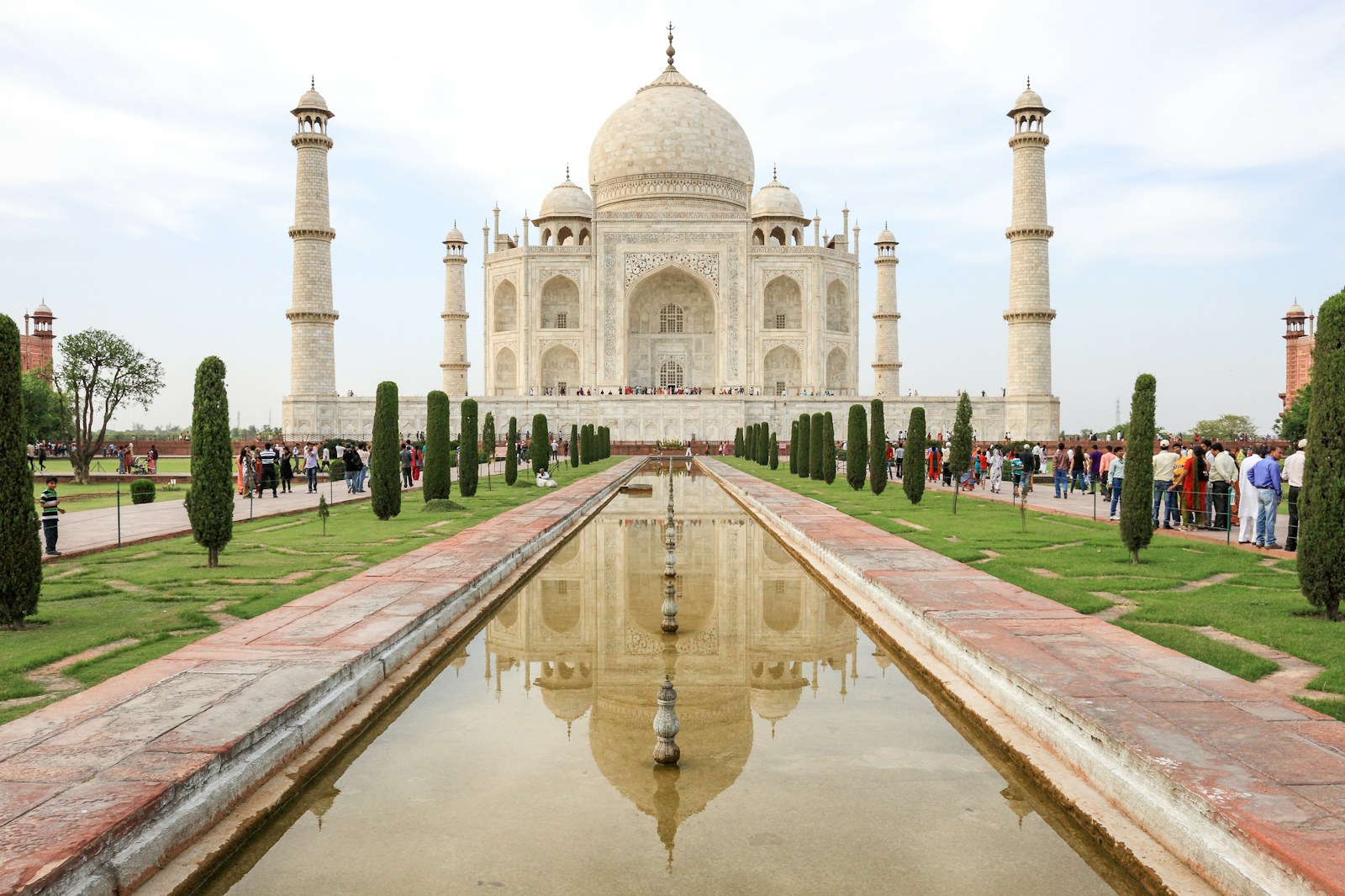
Visit the Taj Mahal in the morning, when you can see the main gateway, reflecting pool, gardens, and marble mausoleum at an unhurried pace. The official site lists opening relative to sunrise and confirms the Friday closure. Check its current ticket, identity-document, and entry rules as you plan your visit.
Have lunch in Taj Ganj, then spend part of the afternoon at Itmad-ud-Daulah. This smaller marble tomb has delicate inlay work, gardens, and a different scale from the Taj Mahal, making it a worthwhile second Agra monument. The remaining afternoon can be used for a cafe, market, or a return to a favorite viewpoint.
If you travel from Agra to Jaipur by pre-booked road transport on day five, Fatehpur Sikri can be an en-route stop. Its former Mughal capital includes palaces, courtyards, and the Jama Masjid complex. Include it only when your chosen transport allows enough time to visit and still reach Jaipur comfortably.
Day 5: Agra to Jaipur and the Pink City
Continue to Jaipur by rail or road, using current services and arrival times for your actual date. The Sheet places check-in near the old-city area, where Hawa Mahal, City Palace, Jantar Mantar, markets, and restaurants are close together. A hotel elsewhere in central Jaipur can also work if it suits your budget and transport preferences.
After arrival, walk around Hawa Mahal. Its layered facade of small windows is Jaipur's most recognizable street view. The surrounding lanes offer shops, sweets, and an introduction to the old city's busy rhythm. Leave the larger palace and observatory visits for day seven, when you have a full day in the center.
Day 6: Amber Palace and the Amer area
Begin at Amber Palace, outside Jaipur's center. The hilltop complex combines courtyards, gateways, gardens, and richly decorated rooms. Spend the morning exploring the palace and its views over Amer.
Have lunch around Amer. On the return to Jaipur, stop at the lakeside viewpoint for Jal Mahal, the palace set within Man Sagar Lake. This is an exterior view from the shore. Spend the evening at a restaurant in Jaipur or return to the old city for a short walk.

Nahargarh Fort is an alternative viewpoint if you want more time above the city; arrange transport and check current access. Bapu Bazaar is an easy swap for a shopping-focused afternoon.
Day 7: Jaipur's City Palace, Jantar Mantar, and markets
Start at Jaipur City Palace for its courtyards, museum collections, and continuing royal history. Nearby Jantar Mantar is an outdoor astronomical observatory with large stone instruments built to measure time and celestial positions. The two sites pair naturally because they stand close together in the old-city core.
After lunch, walk through Johari Bazaar for jewelry shops, textiles, and the streetscape of central Jaipur. Albert Hall Museum is a useful indoor alternative if you want more art and historical collections. Use the evening to prepare for the longer transfer to Udaipur the next morning.
Day 8: Jaipur to Udaipur
Choose a train, flight, or road transfer from Jaipur to Udaipur based on the current timetable, availability, and your preferred arrival hour. Use IRCTC's booking guide when considering rail. The sample Sheet treats day eight as a transfer day and schedules only a waterfront walk after check-in.
Stay around Udaipur's old city or Lake Pichola for easy access to City Palace, Jagdish Temple, Bagore Ki Haveli, and the ghats. Walk down to Gangaur Ghat in the evening to see the lake, palace, and nearby streets as the city settles into its night-time rhythm. The Rajasthan Tourism Udaipur guide is a useful reference for the city's main sights.
Day 9: Udaipur City Palace and Lake Pichola
Begin at Udaipur City Palace, a large complex of courtyards, rooms, museum exhibits, and elevated views over Lake Pichola. Allow a substantial morning here. Jagdish Temple is a short walk from the palace; it is an active place of worship, so dress and behave respectfully.
In the afternoon, visit Bagore Ki Haveli near Gangaur Ghat. The historic house adds domestic architecture and cultural collections to a day otherwise focused on royal buildings. If boats are operating and the weather suits, take a Lake Pichola ride later in the day. Check current embarkation points, tickets, and sailing times locally.

Saheliyon Ki Bari, Fateh Sagar Lake, and Hathi Pol Bazaar are flexible alternatives for more gardens, a lakeside walk, or craft shopping.
Day 10: Depart Udaipur
Walk through the old city or along Gangaur Ghat in the morning if your onward journey allows it. Udaipur's airport is outside the old-city center, so arrange the transfer around your confirmed flight. A later rail departure can leave time for one more meal or a short shopping stop.
Where to stay along the route
- Delhi, two nights: Connaught Place works for central access and restaurant choice. Other well-connected central neighborhoods can also suit your preferred hotel style.
- Agra, two nights: Taj Ganj keeps the Taj Mahal area and many meal options close by. Confirm your hotel's exact entrance and transport access.
- Jaipur, three nights: The old-city area puts Hawa Mahal, City Palace, Jantar Mantar, and markets near one another; central neighborhoods outside the old city may offer quieter lodging.
- Udaipur, two nights: The old city and Lake Pichola area suit walking to palaces, ghats, and restaurants. Ask about vehicle access if your accommodation sits within narrow lanes.
The free Sheet includes these bases and transfer reminders, so you can adjust accommodation as your bookings take shape.
Transport and booking details
Book the intercity legs after you know your arrival and departure cities. Rail can work for Delhi-Agra and Agra-Jaipur, while the Jaipur-Udaipur leg deserves its own schedule check because it consumes a larger part of the day. A pre-booked driver adds flexibility for Fatehpur Sikri between Agra and Jaipur. Flights are another option on some city pairs, subject to current schedules and the airport transfers at each end.
Use IRCTC's official booking guide for rail planning and verify monument information on the relevant official sites. The Taj Mahal's Friday closure is the fixed routing constraint to check first. For other palaces, museums, boats, and parks, recheck hours and access shortly before your trip. Keep a copy of booking details and an identity document available for transport and major attractions.
If your trip starts or ends in another Indian city, compare the onward connection from Delhi and Udaipur before buying an international ticket. This open-jaw arrangement can reduce backtracking, depending on available flights.
What the free India itinerary template includes
- A scheduled Delhi, Agra, Jaipur, and Udaipur itinerary with specific locations and useful links
- Unscheduled options for monuments, museums, markets, shopping, gardens, and an en-route Fatehpur Sikri visit on the Itinerary tab
- Lodging-base and transfer notes, a packing list, pre-trip tasks, and sample shared-cost rows
- Categories for the itinerary stops, which help distinguish different activities when you view them on a map with Travel Mapper
Copy the free India Google Sheets itinerary and adjust the dates, transport, accommodation, and stops to fit your trip. For a planner you can adapt to another destination, see the free Google Sheets travel planner and itinerary template.
How Travel Mapper helps with this trip
Travel Mapper adds a map view to the Google Sheets itinerary. Seeing the Delhi, Agra, Jaipur, and Udaipur stops together helps you review the city order and the placement of activities within each base. You can use the map and itinerary editor as you refine a multi-day, multi-city plan, while keeping the same Sheet for flights, hotels, costs, packing, and notes.
The Sheet remains free to copy and use. If you want the add-on's map view, drag-and-drop itinerary editing, Google Maps autofill, itinerary email, and Google My Maps export, try Travel Mapper from the Google Workspace Marketplace. The full add-on has a seven-day free trial; the basic Sheet remains usable afterward without a subscription. The Travel Mapper Chrome extension can also help you add a place from a page you are researching. For reviewing or editing the trip on your phone while traveling, the Travel Mapper web app works in a mobile browser.
For another route-planning example, the 10 day Thailand itinerary shows how to organize multiple travel bases in one Sheet.
Frequently asked questions
Is 10 days enough for Delhi, Agra, Jaipur, and Udaipur?
Yes. This plan uses nine nights across four bases, with a full Taj Mahal day and two full Jaipur sightseeing days. Add more time if you want extra excursions or a slower Udaipur finish.
Can I visit the Taj Mahal on any day?
No. It is closed to general visitors on Fridays. Check the official visiting-hours page when you set your Agra dates.
Is Fatehpur Sikri included in the scheduled route?
It is an optional stop on the Itinerary tab. It fits most naturally on an Agra-to-Jaipur road transfer with a pre-booked driver; check current access and allow enough time for the visit.
Do I need Travel Mapper to use the Sheet?
No. The Google Sheets itinerary is free to copy and customize. Travel Mapper adds map-based review and editing tools if you choose to try the add-on.