
10-Day Uzbekistan Itinerary + Free Google Sheets Template
Matt - November 4, 2026
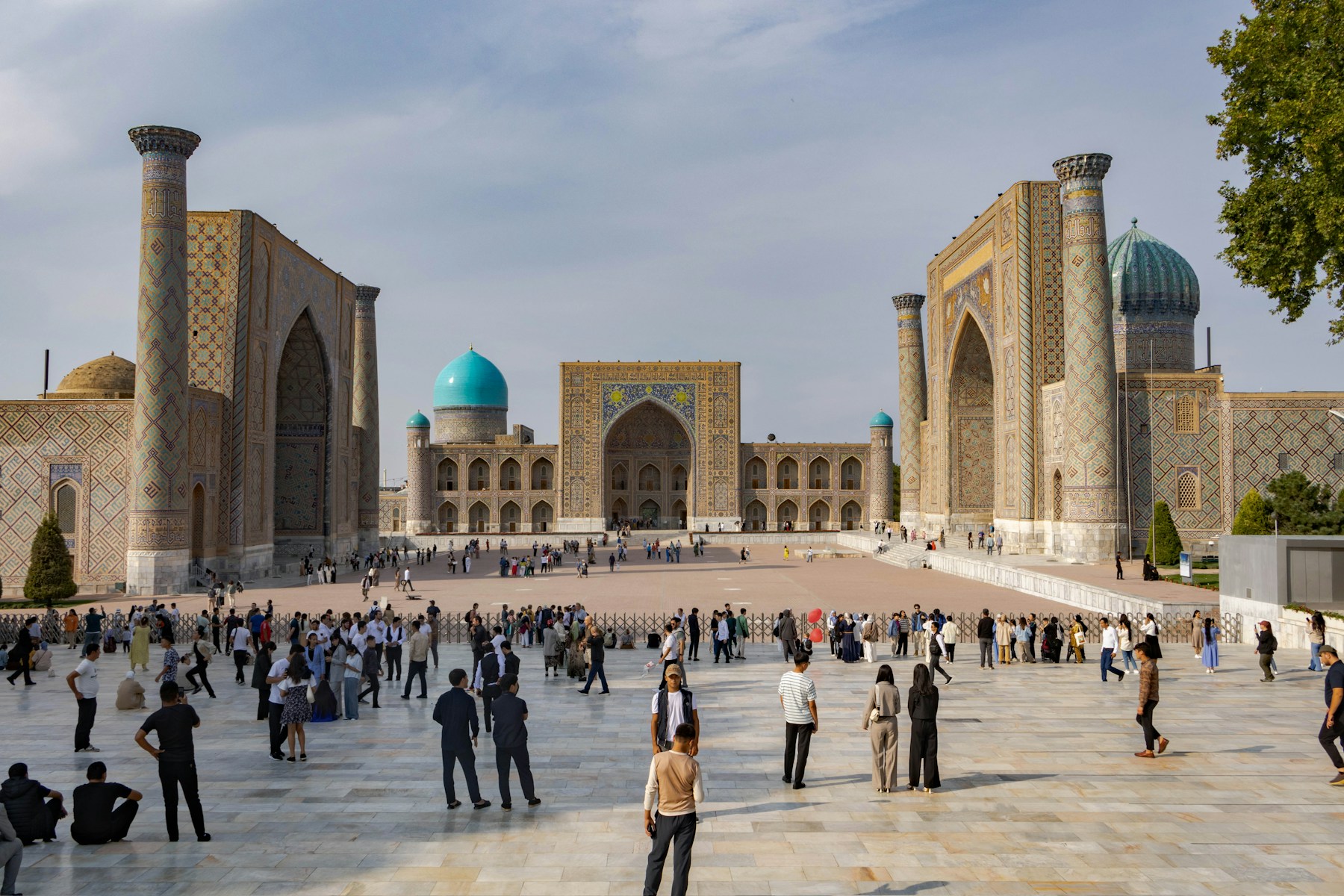
For a first trip to Uzbekistan, spend ten days traveling from Tashkent through Samarkand and Bukhara to Khiva. Give Tashkent two nights, Samarkand three, Bukhara two and Khiva two, then depart through Urgench. This east-to-west itinerary combines tiled madrasas, working bazaars, courtyard neighborhoods and the walled old city of Itchan Kala, with time to explore each base on foot.
The itinerary is also available as a free Uzbekistan Google Sheets itinerary template. Make a copy to customize the dates, activities, accommodation and bookings for your trip. The screenshot below shows the itinerary with the Travel Mapper add-on's map view open.

Itinerary Outline
- Days 1-2: Tashkent. Arrive, explore Amir Temur Square, visit Khast Imam and Chorsu Bazaar, and ride the decorated metro.
- Days 3-5: Samarkand. Travel by train, explore the Registan and the Shah-i-Zinda area, then visit Gur-e-Amir and Ulugh Beg Observatory.
- Days 6-7: Bukhara. Transfer by train and spend time around Lyabi-Hauz, the trading domes, Poi Kalyan and the Ark.
- Days 8-9: Khiva. Travel west, then devote a full day to Itchan Kala's lanes, mosque and palace courtyards.
- Day 10: Departure through Urgench. Arrange an airport transfer around your confirmed onward flight.
This works especially well with arrival in Tashkent and departure from Urgench. If your international flights both use Tashkent, compare the domestic flight and rail options before booking the hotels. Add a Tashkent night before your flight home when you need a connection buffer; a return-to-Tashkent version may need an extra day or a shorter Samarkand stay.
Best Time to Go and How to Pace the Trip
April-May and September-October are good starting points for a trip built around walking and outdoor monuments. Uzbekistan's official seasonal guidance highlights spring and autumn. Bring layers for changes between daytime sightseeing and the evening, along with sun protection for open squares and exposed courtyards.
In summer, plan major outdoor visits early and leave room for a longer lunch or hotel break. In winter, use daylight for neighborhood walks and confirm attraction hours, heating and transport for your dates. Khiva's exposed streets and the long westward transfer deserve particular attention when you plan a cold-weather trip.
The itinerary gives Samarkand the longest stay because its sights are spread across several areas. Bukhara and Khiva lend themselves to concentrated walking days, while Tashkent's metro helps connect its more dispersed neighborhoods. Keep the travel days flexible around the service you actually book. Suggested sightseeing times in the sheet are planning blocks; check admission hours and reservations before fixing your day.
Day 1: Arrive in Tashkent and Explore the Center
Begin with your airport transfer and check-in. For the first afternoon, Amir Temur Square makes a manageable introduction to central Tashkent: a landscaped square surrounded by major avenues and a mix of historic and modern buildings. A short walk here gives you a feel for the capital while leaving time for a meal and rest after the flight.
Choose dinner near your accommodation. This is a useful evening to get a local data connection working, confirm your onward train and ask your hotel about the easiest way to reach the departure station. If your arrival is late, move the square to the following day and keep the evening for settling in.
Stay two nights in Tashkent. A central hotel within an easy walk of a metro station is convenient for this itinerary; compare the exact location with your arrival and train plans before booking.
Day 2: Khast Imam, Chorsu Bazaar and the Metro
Start in the old-city area at Khast Imam, also called Hazrati Imam. The religious ensemble introduces Tashkent's Islamic architecture through its mosque, madrasas and courtyards. Check current access to any collections you want to visit, dress for a religious site and follow instructions at the entrance. The official Tashkent guide provides background on the complex and the city's other principal sights.
Continue to Chorsu Bazaar for market stalls, produce, breads and local food. Leave time to browse the areas that interest you and have lunch around the market. Ask before photographing vendors, and choose food according to your dietary requirements. The bazaar is a useful place to buy snacks for the next day's train.

Spend part of the afternoon on the Tashkent metro. Kosmonavtlar is one option for its distinctive decoration; add other stations according to your hotel and preferred route. This is both transport and an architecture outing, so plan a short selection that connects the places you want to see. Confirm current photography rules and respect commuters while looking around.
For an indoor alternative, consider the State Museum of Applied Arts or the State Museum of the Temurids History. Choose according to whether decorative crafts or Timurid history interests you more, and check the day's opening schedule.
Day 3: Take the Train to Samarkand and Visit the Registan
Book the Tashkent-Samarkand leg through the official railway booking site. Confirm the departure station printed on your ticket and allow time for the station entry process. An early service gives you the most flexibility for checking in and exploring Samarkand later in the day.
After arrival, transfer from the station to your accommodation and have lunch. Make the Registan the main afternoon visit. Its three madrasas face a broad square, with monumental entrance portals, patterned tilework and courtyards that reward a closer look. Give the interiors time as well as the view from the square. The official Samarkand guide identifies Ulugbek, Sherdor and Tilla-Kari as the three madrasas in the ensemble.
If your train arrives later, use the evening for dinner and your first view of the square, then make the interiors the next day's opening visit. Stay three nights in Samarkand, with a hotel near the Registan or Gur-e-Amir area if you want a convenient starting point for this plan.
Day 4: Shah-i-Zinda, Bibi-Khanym and Siyob Bazaar
Begin with Shah-i-Zinda, the mausoleum ensemble known for its richly tiled facades and passageways. A morning visit leaves room to look at the individual architectural details and experience the site respectfully as a place with religious significance. Expect steps and uneven surfaces, and wear shoes suited to walking.
Continue toward Bibi-Khanym Mosque and Siyob Bazaar. These sights work well together geographically: the monumental mosque provides the architectural focus, and the nearby market gives you a natural place for food and browsing. Plan lunch in this area and leave the later afternoon open for market time or a break.
UNESCO's Samarkand heritage overview is useful background for understanding how these monuments fit into the wider historic city. A local guide can add context about the buildings and the city's successive periods of development; agree on the meeting point, duration and admission arrangements when booking.
Day 5: Gur-e-Amir and Ulugh Beg Observatory
Visit Gur-e-Amir in the morning. The mausoleum is associated with Amir Timur and members of his family, with a decorated interior beneath its recognizable dome. It complements the Registan and Shah-i-Zinda by focusing the day on Timurid history before you move on to the city's scientific heritage.
After lunch, travel to Ulugh Beg Observatory. The remains of its large measuring instrument and the accompanying interpretation help explain the astronomical work carried out here. Arrange transport for this part of the day, since the observatory sits beyond the central Registan and Gur-e-Amir walking area.
For a craft-focused alternative, substitute a visit to the Meros paper workshop in Konigil. The workshop demonstrates traditional paper production and has handmade paper products to browse. Confirm the demonstration schedule and return transport when arranging your visit. Keep the observatory and Konigil as choices around your interests and available time.
Day 6: Travel to Bukhara and Settle Around Lyabi-Hauz
Take your booked train to Bukhara, then transfer from Bukhara-1 station in Kagan to your accommodation in the historic city. Include the station-to-hotel journey in your plans when choosing arrival times. A hotel near Lyabi-Hauz or the trading-dome area gives you an easy starting point for the next day's walks.
Use the afternoon for Lyabi-Hauz, the historic ensemble arranged around a pool. Walk through the surrounding lanes, look at the madrasa facades and choose somewhere nearby for dinner. This is a good first orientation because you can explore close to your hotel and decide which shops or streets you want to revisit.
Stay two nights in Bukhara. If your arrival is late, keep this first walk short and include more of the Lyabi-Hauz area in the following day.
Day 7: Poi Kalyan, the Trading Domes and the Ark
Begin with Poi Kalyan, where the minaret, mosque and madrasa form one of Bukhara's defining architectural groups. Spend time in the square and check current visitor access for the buildings you want to enter. Continue through the trading domes, where historic covered-market architecture and craft shops form part of the walk.

After lunch, visit the Ark, the citadel that served as a center of power in Bukhara. Its fortified exterior and museum spaces give a different perspective on the city from the religious ensembles. Nearby Bolo Hauz Mosque is known for its columned frontage and fits naturally with this part of the day.
The national tourism site's Bukhara itinerary provides further ideas. Choose from Chor Minor, the Samanid Mausoleum or the former summer residence of Sitorai Mokhi Khosa if you add another night. The summer residence needs its own out-of-center transport, making it a useful half-day option for a longer stay.
Day 8: Travel West to Khiva
Use this day for the Bukhara-Khiva transfer. The Tourism Committee's September 2026 rail announcement lists a direct Bukhara-1-Khiva service that excludes Mondays. Check the dated railway booking results before choosing your hotel nights: operating days, available trains and journey times can change.
A suitable rail booking is the first choice for this itinerary. If the available service does not suit your dates, compare a licensed, prearranged road transfer with a different departure day. Confirm the full journey, vehicle, price and stops with the provider. Keep sightseeing optional until your arrival time is known.
Stay two nights in or near Itchan Kala, Khiva's walled inner city. If you arrive in the evening, have dinner near your accommodation and enjoy a first walk through the lanes. Ask your host for a convenient pickup point for the departure transfer, especially if your hotel is inside the walls.
Day 9: Explore Itchan Kala in Khiva
Start around the western gate, Ata Darvaza, and the nearby Kalta Minor Minaret. The broad, tiled minaret is a distinctive landmark for getting oriented. From here, walk through the inner city, allowing time for courtyards, small shops and the buildings you most want to enter.
Visit Juma Mosque for its hall of carved wooden columns, then make Tash Khauli Palace the main afternoon interior. The palace adds decorated courtyards and residential architecture to the day's religious and civic buildings. Check which spaces your ticket includes and whether any monuments need separate admission.

UNESCO describes Itchan Kala as a preserved historic inner town with mosques, madrasas and palaces. Its compact geography makes it a rewarding place to explore on foot. Kunya Ark and the Islam Khodja area are additional options; check access and your comfort with stairs before including a climb.
Leave time for craft browsing and a relaxed meal. Khiva has working shops and residents as well as monuments, so the lanes and smaller spaces are part of the visit. The official Khiva guide offers more background on the city's architecture.
Day 10: Depart Through Urgench
Arrange the transfer from Khiva to Urgench airport around your confirmed flight. Check Uzbekistan Airways and your chosen airline for current flights and connection arrangements. Verify the airport and terminal, baggage allowance, check-in deadline and the time your driver will collect you.
For a domestic flight to Tashkent followed by a separate international ticket, an overnight stay in Tashkent gives you more room between flights. Build that night into the trip length, or shorten an earlier stay to fit your available days. A route beginning in Khiva and ending in Tashkent can also work well when your flight and train dates favor that direction.
Where to Stay
- Tashkent, two nights: Central accommodation with convenient metro access helps connect the square, old-city sights and station transfer.
- Samarkand, three nights: The Registan or Gur-e-Amir area is useful for evening walks and central sights; plan transport to the station and observatory.
- Bukhara, two nights: Stay near Lyabi-Hauz or the trading domes for a walkable historic-center base. Confirm the transfer from Kagan station.
- Khiva, two nights: Accommodation within or just outside Itchan Kala supports early and evening walks. Check luggage access, pickup points and heating or cooling for your season.
Compare the exact hotel entrance with your planned walking route and transfer pickup. For courtyard guesthouses, recent reviews about room comfort, noise, stairs and bathroom arrangements can be particularly helpful. Request any accessibility details directly from the accommodation and attraction operators.
Transport, Tickets and Pre-Trip Planning
Reserve the longer transport legs before finalizing nonrefundable hotels. Use the official rail booking site for your actual travel dates, and check the station names, passenger details and ticket conditions. Train types vary by leg, so choose from the services offered for that journey. Keep a copy of each ticket available offline and bring the required identity document.
Admission hours, interior access, separate monument tickets and photography rules should be checked close to your visit. Religious sites may have dress requirements and periods of restricted access. A hotel or licensed local guide can help confirm the daily opening arrangements.
Before booking, check current Uzbekistan travel advice, your own government's guidance and the entry requirements for your passport. Ask your accommodation about visitor-registration arrangements. Check transit-country and airline updates too, especially when your journey connects through another region.
For spending, budget separately for accommodation, intercity travel, station and airport transfers, monument admission, meals and optional guides. Confirm prices at booking and keep some local currency available for smaller purchases. This itinerary leaves costs open so your plan can reflect the rooms, trains and activities you choose.
Ways to Adapt This Itinerary
For seven days: Focus on Tashkent, Samarkand and Bukhara, then return to your departure city. This gives you a compact three-base version with fewer long transfers.
For a slower ten days: Use those same three bases and add the extra time to Bukhara and Samarkand. Konigil, the summer residence outside Bukhara and more museum time become easier to include.
For twelve to fourteen days: Keep all four cities, add another Bukhara night and include a Tashkent departure buffer. A guided excursion beyond Khiva can be considered after checking journey length, weather and the provider's arrangements.
The multi-city trip-planning guide can help you compare base order, overnight stays and departure logistics before you commit to the bookings.
What the Uzbekistan Google Sheets Itinerary Includes
- A ten-day Tashkent, Samarkand, Bukhara and Khiva plan with dates, activity times, locations and transport reminders.
- Unscheduled museum, craft, food and additional sightseeing ideas on the Itinerary tab.
- Categories that distinguish food, attractions, transport and other activities in the Travel Mapper map view.
- Editable booking links, notes and cost fields, plus the original template's checklist and split-cost calculator.
For a general planner you can adapt to any trip, see the free Google Sheets travel planner and itinerary template.
How Travel Mapper Helps With an Uzbekistan Trip
The free Uzbekistan itinerary gives you a shared plan to customize in Google Sheets. With Travel Mapper for Google Sheets, you can also see the itinerary on a map and review how the places fit together: Samarkand's separate sightseeing areas, Bukhara's station outside the historic center, and Khiva's connection with Urgench airport.
The add-on includes map view, Google Maps autofill, drag-and-drop itinerary editing, itinerary email and Google My Maps export. You can try the full add-on features free for seven days. If you do not subscribe, the basic spreadsheet remains usable for free; paid add-on tools such as map view are separate from that free template.
The Travel Mapper Chrome extension can help you add activities while researching places online. If you want to review or edit the trip from your phone while traveling, the Travel Mapper web app works in a mobile browser.
Start with the free itinerary template, then install Travel Mapper when you want to review your multi-city plan on a map.
Uzbekistan Itinerary FAQ
Is ten days enough for Uzbekistan?
Ten days can cover Tashkent, Samarkand, Bukhara and Khiva with the allocation above, especially when you arrive in Tashkent and depart through Urgench. Add time for a return-to-Tashkent connection or choose three bases for a slower trip.
Should I include Khiva or spend longer in Bukhara?
Include Khiva if its walled inner city is a priority and the westward transport works for your dates. Spend longer in Bukhara if you prefer fewer hotel changes, more neighborhood walks and additional visits around the city. Compare the actual rail and flight options before deciding.
Can I do this Uzbekistan itinerary by train?
Trains connect the main city sequence, but you should verify the services and operating days for each leg. The Bukhara-Khiva service in the September 2026 official announcement excludes Mondays. Local station transfers and the Khiva-Urgench airport journey also need arranging.
Do I need a car for the whole trip?
The city-to-city plan can be built around trains, with metro, walking and local transfers. Arrange separate transport for outlying sights such as the observatory or Konigil, according to the places you choose to include.
Is the Google Sheets itinerary free?
Yes. You can copy the itinerary and keep using the basic Google Sheets planner for free. Travel Mapper's map and other full add-on tools are available through the seven-day trial and a subscription afterward.