
10 Day Spain Itinerary: Madrid, Seville, Granada & Barcelona Google Sheets Template
Matt - July 15, 2026
Ten days in Spain is enough time to combine Madrid, Seville, Granada, and Barcelona when you travel in one direction and use the train for the main city-to-city moves. This route gives Madrid and Barcelona two full sightseeing days, adds two nights in Seville, and leaves a focused day in Granada for the Alhambra and the city's historic neighborhoods.
Use the free 10 day Spain itinerary Google Sheets template to adapt the route for your own flights, hotels, train times, restaurant ideas, and reservations. The sample plan also includes optional ideas such as Toledo, Cordoba, Montjuic, and Girona if you have extra time or want to adjust the city balance. For a reusable planner for other multi-city trips, start with the free Google Sheets travel planner template.

Itinerary Outline
This 10 day Spain itinerary follows:
- Days 1-3: Madrid
- Days 3-5: Seville
- Days 5-7: Granada
- Days 7-10: Barcelona
The route works especially well with a flight into Madrid and out of Barcelona. Madrid introduces Spain through major art museums, royal landmarks, broad boulevards, and lively neighborhoods. Seville brings Moorish and Gothic architecture, flamenco culture, orange-tree courtyards, and long evenings around the old center. Granada is smaller and hillier, with the Alhambra as its centerpiece. Barcelona finishes the trip with Gaudi architecture, Mediterranean neighborhoods, markets, and the waterfront.
What the Spain itinerary template includes
The template is filled with a realistic sample trip that you can adjust for your own dates and interests. It includes:
- A complete Madrid, Seville, Granada, and Barcelona itinerary
- Official links for major attractions, train planning, and visitor information
- Unscheduled ideas to consider for day trips, museums, neighborhoods, markets, viewpoints, and evening activities
- A Spain-focused packing list and pre-trip checklist
- A shared-cost tracker for lodging, trains, tickets, meals, and local transport
- Space for your own hotels, restaurants, reservation details, and notes
The sample dates use September, which is a good time for this route because Madrid and Andalusia are usually more comfortable than during the hottest part of summer. Confirm the exact train schedule, attraction hours, and ticket rules for your travel dates before booking.
Best time for this Spain itinerary
April through early June and September through October are the easiest seasons for combining central Spain, Andalusia, and Barcelona. Madrid and Seville can be warm without the more intense heat of midsummer, while Barcelona still has pleasant weather for long walks and time near the water.
July and August can work, but afternoon heat changes the pace in Madrid, Seville, and Granada. Reserve timed attractions early in the day, take a longer lunch or hotel break, and return to outdoor neighborhoods in the evening. Barcelona and the coast are especially busy during this period, so lodging and popular Gaudi sites should be booked well ahead.
Winter brings cooler temperatures, shorter days, and generally lighter crowds outside the holiday period. Seville and Granada can feel chilly in the morning and after sunset, while Madrid sometimes has genuinely cold weather. Pack layers and check daylight hours when planning outdoor viewpoints and day trips.
Day 1: Arrive in Madrid and explore the historic center
Stay around Sol, Barrio de las Letras, Gran Via, or Retiro for a first visit. Sol puts you at the center of the old city, while Barrio de las Letras is quieter at night and convenient for the Prado and Retiro. Gran Via has strong transport connections and plenty of restaurants and shops.
After checking in, begin at Puerta del Sol and walk toward Plaza Mayor. Sol is Madrid's central meeting point, and the surrounding streets give you an immediate sense of the city's late dining hours and busy pedestrian life. Plaza Mayor is an enclosed arcaded square that once hosted markets, public ceremonies, and royal events; today it is best enjoyed as part of a wider walk through the old center.
Continue to Mercado de San Miguel for a look at the restored iron market hall, then walk toward Plaza de la Villa and the Royal Palace area. The market can be crowded and is more of a food hall than an everyday neighborhood market, so it works well for a snack before dinner elsewhere.
Spend the evening in La Latina. The neighborhood's sloping streets, small plazas, and concentration of tapas bars make it an easy first-night introduction to Madrid. Calle Cava Baja is the best-known strip, but the nearby side streets usually provide a more relaxed meal.
Day 2: The Prado, Retiro Park, and Barrio de las Letras
Start at the Prado Museum, whose collection is especially strong in Spanish painting. Velazquez, Goya, El Greco, and Bosch are among the major reasons to visit. A timed entry helps, and two to three hours gives you a focused first visit with time for the galleries that interest you most.
Walk along Paseo del Prado to Retiro Park. The park was once connected to the royal court and now serves as Madrid's central green space. The lake and Monument to Alfonso XII are the busiest landmarks, while the Crystal Palace, formal gardens, and quieter tree-lined paths reward a longer walk. Check the current status of temporary exhibitions and individual buildings, since access can change.
Return toward Barrio de las Letras in the late afternoon. Writers including Cervantes, Lope de Vega, and Quevedo once lived in this part of the city, and literary quotations are set into the pavement along several streets. It is also one of the best areas for an unhurried dinner because you can move between small plazas and restaurants without needing another cross-city trip.
Day 3: The Royal Palace, then train to Seville
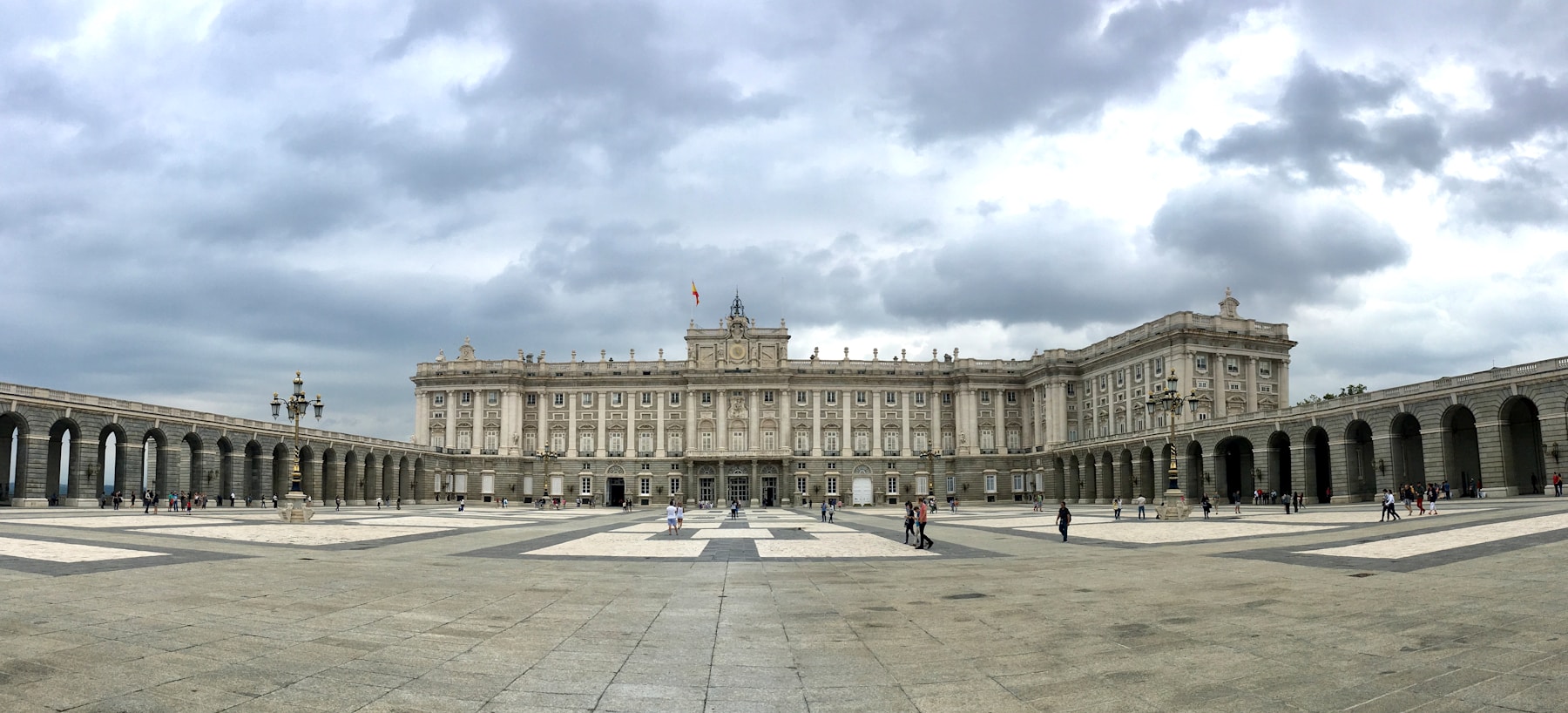
Reserve a morning visit to the Royal Palace of Madrid. The palace is known for its ceremonial rooms, grand staircase, royal armory, painted ceilings, and collections of clocks, tapestries, and decorative art. The building remains an official royal residence used for state occasions, so opening times can change around events.
After the palace, see Almudena Cathedral and the viewpoints around Plaza de Oriente. The cathedral is directly opposite the palace and has a much newer history than many visitors expect: construction stretched across more than a century, and it was consecrated in 1993. The surrounding terraces look toward Casa de Campo and the western side of Madrid.
Take an afternoon high-speed train from Madrid-Puerta de Atocha to Seville-Santa Justa. Renfe's Madrid-Seville route page is the best place to check current services and fares. Choose a departure that gives you time to reach the station without shortening the palace visit.
After checking in, walk through Santa Cruz. The former Jewish quarter is a maze of narrow lanes, whitewashed facades, small plazas, patios, and orange trees beside the cathedral and Alcazar. It is particularly atmospheric in the evening, once the busiest daytime groups have moved on.
Day 4: The Real Alcazar, Seville Cathedral, and Triana
Begin with the Real Alcazar of Seville. The palace complex developed over many centuries, and its best-known rooms combine Mudéjar craftsmanship with later Gothic, Renaissance, and Baroque additions. Highlights include the Patio de las Doncellas, intricate tilework and carved plaster, royal apartments, and a large garden complex filled with fountains, pavilions, palms, and orange trees.

Continue to Seville Cathedral, one of the world's largest Gothic cathedrals. Inside, look for the vast gilded altarpiece, the tomb associated with Christopher Columbus, and the scale of the former mosque's courtyard. The Giralda bell tower began as a minaret, and its ramped ascent ends with broad views over the tiled roofs and church towers of central Seville.
In the afternoon, walk through Maria Luisa Park to Plaza de Espana. The semicircular brick complex was built for the 1929 Ibero-American Exposition and is known for its canal, tiled bridges, ceramic alcoves representing Spanish provinces, and sweeping curve around the plaza. Give yourself time to look closely at the tilework representing different parts of Spain.
Cross the Guadalquivir to Triana for the evening. The neighborhood has a long connection to ceramics, flamenco, sailors, and river trades. Visit the market near the Triana Bridge, look into the ceramic shops around Calle Alfareria, and choose dinner on a side street or along Calle Betis with the Seville skyline across the water.
Day 5: Seville morning and transfer to Granada
Use the morning for anything you missed in the center. The Metropol Parasol provides an elevated view over rooftops and church towers, while Casa de Pilatos offers a quieter palace visit with Mudéjar tiles, Renaissance courtyards, and a more intimate scale than the Alcazar. Flamenco-focused travelers can also visit a museum or reserve a performance for the previous evening.
Travel to Granada after lunch. Direct rail and bus options vary by date, so compare the current schedule and arrival point before booking. Granada's rail station is north of the center, while the main bus station is farther out; both require a local taxi or bus for most central hotels.
Stay around Centro for easy restaurant and cathedral access, the lower Albaicin for historic atmosphere with a manageable walk, or Realejo for a neighborhood base between the center and the Alhambra approaches. The upper Albaicin has memorable views but steep cobbled streets and can be inconvenient with luggage.
Spend the evening around the cathedral, Alcaiceria, and Calle Navas. Granada is known for the tradition of serving a small tapa with a drink at many bars, making it easy to try several places over the course of the evening.
Day 6: The Alhambra and Granada's historic neighborhoods
Set aside most of the day for the Alhambra. The complex includes the Nasrid Palaces, Alcazaba fortress, Palace of Charles V, Generalife gardens, and surrounding grounds. The Nasrid Palaces are the most time-sensitive part of the visit: your ticket includes a specific entry time, and you should arrive at that entrance early enough to find the queue.

The Nasrid Palaces are known for carved stucco, geometric tilework, calligraphy, courtyards, and the carefully framed relationship between architecture, water, and light. The Court of the Myrtles and Court of the Lions are the most recognizable spaces, while the Alcazaba gives you open views over Granada. Generalife served as a retreat outside the main palace walls, with gardens, water channels, shaded walkways, and terraces.
Buy tickets only through the official Alhambra ticket site or another clearly authorized channel, and reserve as early as your dates allow. Bring the identification required for your ticket and wear comfortable shoes; the site is large, and the paths between sections take time.
Later, explore the Albaicin. This hillside district preserves a street pattern shaped by Granada's Islamic history, with narrow lanes, whitewashed homes, small squares, and cypress-filled gardens. Mirador de San Nicolas is the classic viewpoint toward the Alhambra and Sierra Nevada, especially near sunset. The viewpoint can be busy, so nearby terraces and side streets offer other angles.
Finish in Sacromonte if you are interested in cave houses and flamenco traditions, or return to Realejo and the center for dinner. A hammam visit is another good choice after a full day of walking.
Day 7: Travel from Granada to Barcelona
The direct train to Barcelona is the simplest option when its schedule fits your date, though it takes much of the day. Flying can be faster in the air but also adds airport transfers, security, and waiting time. Compare the complete door-to-door journey before choosing.
For a train journey, bring lunch or buy food before boarding and use the travel time as a rest between two intensive sightseeing days. For a flight, Granada Airport is outside the city and Barcelona-El Prat is southwest of central Barcelona, so include both airport transfers in your timing.
Stay in Eixample for convenient transport and a central base near several Gaudi sights, the Gothic Quarter or El Born for older streets and evening atmosphere, or Gracia for neighborhood plazas and a more residential feel. Eixample is the easiest all-around choice for this itinerary.
Use the evening for Passeig de Gracia, where Casa Batllo and La Pedrera introduce Gaudi's architecture from the street, then continue into Gracia for dinner. The neighborhood's small squares become lively in the evening and offer a relaxed first look at Barcelona beyond its main monuments.
Day 8: Sagrada Familia, Sant Pau, and Park Guell
Reserve an early entry to the Sagrada Familia. The basilica combines a forest-like interior, branching columns, colored light, sculptural facades, and an evolving construction history that spans more than a century. The Nativity and Passion facades have very different visual styles, so walk around the exterior after seeing the interior.

From the basilica, walk along Avinguda de Gaudi to the Recinte Modernista de Sant Pau. The former hospital complex was designed by Lluis Domenech i Montaner and is known for colorful Modernista pavilions, mosaics, sculpture, gardens, and underground corridors. It offers a useful comparison with Gaudi's work and is often calmer than the city's headline attractions.
Continue to Park Guell for a timed afternoon entry. The monumental zone includes the tiled terrace, serpentine bench, monumental staircase, and structures that blend architecture with the hillside landscape. The park has slopes and multiple entrances, so check the recommended arrival point for your ticket before leaving Sant Pau.
Spend the evening in Gracia. Plaça del Sol, Plaça de la Virreina, and the surrounding streets have restaurants, bars, bakeries, and small shops within a compact area.
Day 9: Gothic Quarter, El Born, and the waterfront
Begin in the Gothic Quarter around Barcelona Cathedral, Plaça del Rei, and the Roman walls. The district contains medieval streets and buildings, but it is also a working center filled with shops, homes, civic offices, and busy pedestrian routes. Morning is the best time to see the narrower lanes before they become crowded.
Continue into El Born. Visit Santa Maria del Mar for its Catalan Gothic interior, then choose between the Picasso Museum, the Born archaeological center, or more time around the neighborhood's design shops and cafes. Reserve the Picasso Museum ahead if it is a priority.
Walk through Parc de la Ciutadella and toward the waterfront. Barceloneta has a broad beach, seafood restaurants, and a street grid built for the eighteenth-century harbor district. The beach is useful for a walk or swim in warm weather, while the nearby Port Vell promenade connects back toward the old city.
For dinner, stay in Barceloneta for seafood, return to El Born for small plates and wine bars, or visit Poble-sec for casual restaurants near Montjuic.
Day 10: Choose a final Barcelona focus and depart
Use your final morning for the part of Barcelona that best matches your interests. Architecture-focused travelers can book Casa Batllo or La Pedrera. Food-focused travelers can visit La Boqueria early, then explore the Sant Antoni market area. For city views, Montjuic combines gardens, museums, Olympic sites, and overlooks above the harbor.
If you have a late flight, Montjuic works particularly well because you can choose a short visit around the cable-car viewpoints or a longer museum and garden route. Check opening times carefully, since several Montjuic museums close on Mondays or have shorter days.
Allow time to travel to Barcelona-El Prat Airport. The airport has two terminals, and transport time varies by neighborhood and service, so confirm your terminal before leaving the city.
Where to stay along the route
Madrid
Sol and Gran Via are central and well connected, Barrio de las Letras is ideal for the Prado and evening restaurants, and Retiro provides a calmer base beside the park. Around Atocha is practical when you have an early train, but the atmosphere varies block by block.
Seville
Santa Cruz places you beside the Alcazar and cathedral, El Arenal is convenient for the river and central sights, and Alameda offers a livelier local restaurant scene north of the historic core. Triana is a good choice when you prefer neighborhood evenings and do not mind crossing the river for the main monuments.
Granada
Centro is easiest for a short visit, Realejo has character and good access toward the Alhambra, and the lower Albaicin offers historic atmosphere near the center. Check hills and stairs before booking an upper Albaicin property, especially when traveling with larger bags.
Barcelona
Eixample is the most convenient all-around base for this itinerary. El Born and the Gothic Quarter offer historic surroundings but can be noisy, while Gracia has a more residential feel and excellent evening plazas. Stay near a metro stop if you plan to move between Park Guell, the waterfront, and Montjuic.
Train and booking notes
An open-jaw flight into Madrid and out of Barcelona saves a full return journey. The core route does not require a rental car: central Madrid, Seville, Granada, and Barcelona are walkable, and trains cover the longest transfers.
Book these parts first:
- Flights and the Madrid-to-Barcelona direction of travel
- Lodging in all four cities
- Madrid-Seville and Granada-Barcelona transport
- Alhambra tickets with a Nasrid Palaces entry time
- Real Alcazar, Sagrada Familia, and Park Guell timed tickets
Then add museum reservations, restaurants, flamenco performances, and smaller activities. Train schedules and station assignments can change, so use the current operator timetable for your exact date. Leave enough time for station security and finding the platform, particularly at larger terminals.
For a broader approach to organizing several cities, read the multi-city vacation planning guide. If you are comparing other European routes, the 10 day Italy itinerary, 10 day Portugal itinerary, and 10 day Switzerland itinerary use the same template-backed planning approach.
Optional Spain itinerary ideas
- Toledo: a compact hilltop city south of Madrid known for its cathedral, former synagogues and mosques, El Greco connections, and layered Christian, Jewish, and Islamic history
- Reina Sofia Museum: Madrid's major modern-art museum and the home of Picasso's Guernica, useful when art is a higher priority than a day trip
- Cordoba: a strong stop between Madrid and Seville for the Mosque-Cathedral, Jewish Quarter, patios, and Roman bridge; add a night or store luggage during a carefully timed rail stop
- Metropol Parasol: a modern wooden landmark in Seville with an elevated walkway and city views
- Sacromonte: Granada's hillside cave-house district, associated with flamenco traditions and views toward the Alhambra
- Casa Batllo or La Pedrera: two of Gaudi's most important residential buildings on or near Passeig de Gracia
- Montjuic: Barcelona's museum, garden, and viewpoint district above the port
- Girona: a day trip from Barcelona for medieval streets, cathedral steps, preserved Jewish-quarter lanes, and riverside houses
Toledo and Cordoba are the easiest additions when you can extend the trip to eleven or twelve days. Girona works best when you add a fourth night in Barcelona. Within ten days, choose one optional idea in place of a scheduled activity so the route still has time for meals, neighborhood walks, and unplanned discoveries.
How Travel Mapper helps with a Spain trip
The free template keeps hotels, train links, timed tickets, activities, costs, packing, and shared trip notes together in Google Sheets. With Travel Mapper, you can see the itinerary on a map inside the same spreadsheet and compare how each day's stops are grouped before finalizing reservations.
The map view is especially helpful in Madrid and Barcelona, where attractions spread across several neighborhoods. Drag-and-drop itinerary editing makes it easier to fine-tune the day order, and Google Maps autofill can add place details to the sheet. The Chrome extension can also add places from webpages while you research museums, restaurants, and day trips.
Travel Mapper includes a seven-day trial of the full add-on feature set. After the trial, you can keep using the basic Google Sheets template for free or upgrade for map-based tools, itinerary email, and Google My Maps export.
Copy the free 10 day Spain itinerary template and adjust the route for your own trip.
Frequently asked questions
Is 10 days enough for Madrid, Seville, Granada, and Barcelona?
Yes, when you travel into Madrid and out of Barcelona and accept a fairly active pace. The route provides useful time in all four cities, though travelers who prefer slower mornings and fewer hotel changes may want to choose either Granada or Seville and add those nights to the other bases.
How many nights should I spend in each city?
This itinerary uses two nights in Madrid, two in Seville, two in Granada, and three in Barcelona, with the final departure on Day 10. An early arrival in Madrid helps. If your first day begins late, add a Madrid night or shorten Barcelona by one night only when your departure time still leaves enough city time.
Do I need a car for this Spain itinerary?
No. High-speed and intercity trains connect the main route, and each city has useful public transport. A car becomes more helpful for rural Andalusia, white-village routes, or countryside extensions that are outside this city-focused itinerary.
Should I book the Alhambra in advance?
Yes. The Nasrid Palaces use timed entry, and desirable dates can sell out. Reserve through the official Alhambra ticket site as soon as your travel dates are firm, then plan the rest of Granada around that entry time.
Can I add Cordoba without extending the trip?
You can replace part of Madrid or Seville with a Cordoba stop, but an extra night makes the visit easier. Cordoba sits on the rail corridor between Madrid and Seville, so it fits naturally as an overnight or as a luggage-storage stop when train times align.
Where should I start and end this Spain trip?
Start in Madrid and finish in Barcelona, or reverse the route if flights work better that way. Madrid is a convenient gateway for the Andalusia portion, while Barcelona has extensive international connections and makes a rewarding final three-night base.
How does the free Spain itinerary template work?
Open the public Google Sheets template and choose Make a copy to add it to your own Google Drive. You can update the dates, hotels, bookings, activities, costs, and checklists for free. Install Travel Mapper when you want to see the itinerary on a map and use the add-on planning features inside Google Sheets.