
7 Day Ireland Road Trip Itinerary: Dublin, Galway & Killarney Google Sheets Template
Matt - July 19, 2026
Seven days in Ireland is enough for a first trip that combines Dublin, Galway, the Cliffs of Moher, and Killarney National Park without changing hotels every night. This route uses Dublin for history and city time, Galway for the west-coast atmosphere, and Killarney for lakes, woodland, waterfalls, and a scenic drive through County Kerry.
Start with the free 7 day Ireland road trip Google Sheets template. It includes the route below, lodging and transport rows, official links, a packing checklist, shared-cost examples, and unscheduled ideas such as Howth, Kylemore Abbey, the Aran Islands, Dingle, and the Gap of Dunloe. Update the dates, reservations, driving plan, and activities for your own trip.

Itinerary Outline
This 7 day Ireland itinerary follows:
- Days 1-2: Dublin
- Days 3-4: Galway and the Cliffs of Moher
- Days 5-7: Killarney, Killarney National Park, and the Ring of Kerry
The route works best as an open-jaw trip when possible: arrive through Dublin and depart from Kerry or Cork after Killarney. A Dublin return is also possible, but it adds a long final transfer. If you need to fly home from Dublin, use Day 7 for a shorter Killarney morning and travel toward Dublin, or add an extra night near the airport.
Dublin provides the strongest introduction to Irish history, literature, museums, and neighborhoods. Galway is a walkable base for the west coast, with a lively center and easy access to County Clare. Killarney brings the landscape portion of the trip into focus, with lakes, wooded paths, historic estates, waterfalls, mountain views, and the scenic roads of the Iveragh Peninsula.
What the Ireland itinerary template includes
The public template is already populated with a realistic sample trip that you can adapt. It includes:
- A complete Dublin, Galway, Cliffs of Moher, and Killarney route
- Official links for attractions, rail travel, national parks, and visitor information
- Unscheduled ideas to consider for neighborhoods, museums, viewpoints, seasonal stops, day trips, and alternative routes
- An Ireland-focused packing and pre-trip checklist
- Shared-cost examples for lodging, transport, attractions, meals, and activities
- Room for hotel details, reservation times, costs, notes, and links
The sample dates use September, when the route usually has enough daylight for sightseeing and scenic drives without the busiest midsummer conditions. Ireland's weather can change quickly in every season, so check current attraction hours, road conditions, ferry or tour schedules, and the forecast for your exact dates.
Best time and pacing for this Ireland itinerary
May through September is the easiest period for this route if you want longer daylight for the west coast and Killarney. June and July provide the longest days, while May and September can be a good balance for walking, driving, and city visits. Popular lodging and major Dublin attractions still book ahead during these months.
April and October can work well for travelers who prefer a quieter trip, but plan around shorter daylight and more weather variation. Some seasonal tours, boat trips, and smaller attractions run on reduced schedules outside the main season. Check the current schedule with each operator, since service can change by season.
Winter is best for a Dublin-centered itinerary with a smaller west-coast section. The Cliffs of Moher, Killarney, and the Ring of Kerry can still be rewarding, but wind, rain, short daylight, and occasional road closures make a flexible plan more important. Keep outdoor stops easy to move between days and confirm opening hours before setting out.
The route has three main bases, which keeps the trip manageable. Dublin is best explored on foot and by public transport. Galway works well without a car for the city itself, but a car or organized tour makes County Clare and the wider west coast easier. Killarney is walkable around the center, while a car, bicycle, taxi, or tour gives you access to the national park and surrounding peninsulas.
Day 1: Arrive in Dublin and explore the central neighborhoods
Stay around Trinity College, Temple Bar, St Stephen's Green, Dublin 8, or Smithfield. Trinity and St Stephen's Green are convenient for first-time sightseeing. Dublin 8 puts you close to the Guinness Storehouse, Kilmainham, and the historic liberties. Smithfield has good transport connections and a neighborhood feel north of the Liffey.
Keep the first afternoon close to your lodging. Walk along the River Liffey, cross Ha'penny Bridge, and continue toward Trinity College and Grafton Street. Grafton Street is Dublin's main shopping and busking thoroughfare; the lanes around it lead to cafes, pubs, and St Stephen's Green, a compact Victorian park with ponds, lawns, and tree-lined paths.
If you arrive early enough, continue toward Dublin Castle and the Chester Beatty. Dublin Castle has medieval and later state rooms, while the Chester Beatty holds manuscripts, paintings, prints, and decorative arts from Europe, the Middle East, North Africa, and Asia. Both fit naturally into a historic-center walk.
For dinner, choose a restaurant or pub in Dublin 8, the Liberties, Temple Bar's surrounding streets, or around South William Street. Temple Bar is convenient for a first look at Dublin's pub culture, but nearby neighborhoods generally offer more choice for a full meal.
Day 2: Trinity College, Kilmainham, and the Guinness Storehouse
Start at Trinity College's Book of Kells Experience. The exhibition explains the illuminated manuscript, its materials, and its place in early medieval Ireland before leading into the Long Room, the historic library chamber known for its vaulted timber interior and rows of books.

After Trinity, walk through the center or use local transport toward Kilmainham Gaol. The former prison is closely tied to Irish political history, including the imprisonment and executions of leaders connected to the 1916 Easter Rising. The guided tour moves through the older stone corridors, the Victorian east wing, and the memorial history of the site. Advance booking is important because entry is by timed tour.
Continue to the Guinness Storehouse in St James's Gate if the brewery experience interests you. The multi-floor visit covers the history of Guinness, brewing ingredients, advertising, pouring technique, and the Gravity Bar's view over Dublin. It is a substantial attraction rather than a quick tasting stop, so allow enough time before booking dinner or another timed activity.
If you prefer a quieter afternoon, replace the Guinness visit with the National Museum of Ireland - Decorative Arts & History at Collins Barracks, the Irish Museum of Modern Art at the Royal Hospital Kilmainham, or a longer walk through Phoenix Park. Phoenix Park is one of Europe's largest enclosed public parks and contains open lawns, tree-lined roads, the Wellington Monument, and Dublin Zoo.
Return through Dublin 8 or the south side for dinner. The city is compact enough that you can spend the evening in a different neighborhood without turning it into a major transfer.
Day 3: Train to Galway and a first evening by the water
Take the train from Dublin Heuston to Galway using the current Irish Rail timetable. Check the live schedule for your date and allow time to reach Heuston station from your lodging. The train is a convenient way to leave Dublin without beginning the western part of the trip with a long drive.
Stay near Eyre Square for easy access to restaurants, the train and bus stations, and the main pedestrian streets. The Latin Quarter is a lively base close to the Spanish Arch, Galway City Museum, and the waterfront. Salthill suits travelers who prefer a seafront promenade and do not mind walking or taking local transport into the center.
After checking in, explore Eyre Square and the streets leading through Shop Street toward the Spanish Arch. Eyre Square is Galway's main urban park and meeting point. Shop Street continues as a pedestrian route lined with shops, cafes, pubs, and musicians. The Latin Quarter becomes more atmospheric as the evening goes on, with restaurants and pubs in compact lanes around Cross Street and Quay Street.

Walk along the River Corrib to the Spanish Arch and the Long Walk. The Spanish Arch is a surviving extension of the medieval city walls beside the river, while the Long Walk gives you a broad view back toward the colorful waterfront and the Galway Bay light. For sunset, continue along the promenade toward Salthill if the weather is comfortable.
Day 4: Cliffs of Moher and the Burren
Use Galway as a base for a full day in County Clare. A rental car gives you the most flexibility for the Cliffs of Moher, the Burren, Doolin, and smaller coastal stops. An organized tour can work well if you prefer not to drive on narrow rural roads; compare the current route, stop lengths, and return time before booking.
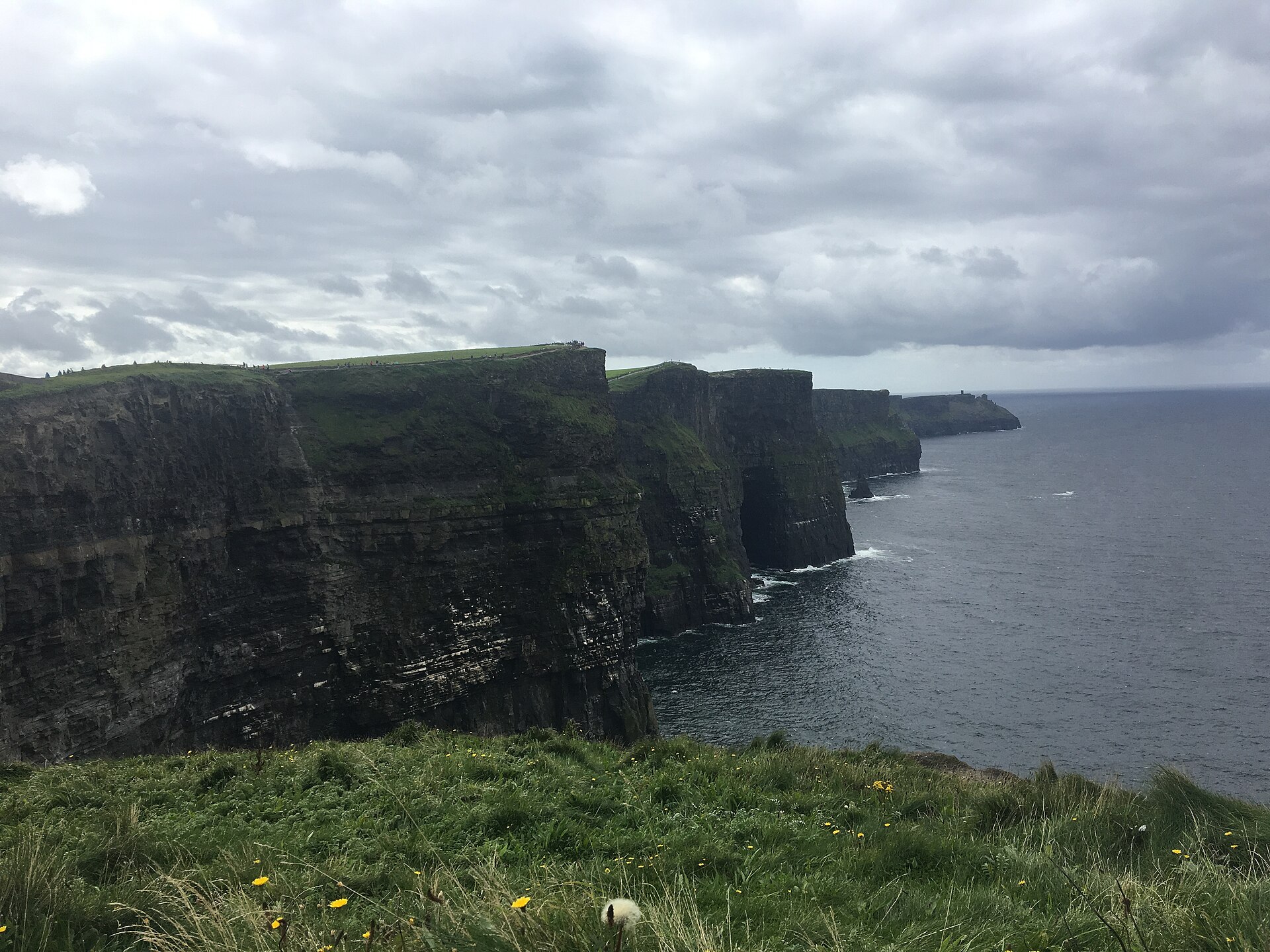
Start at the Cliffs of Moher, where the Atlantic cliffs rise above a long stretch of County Clare coastline. The visitor area includes marked walking paths, the visitor center built into the hillside, and views toward sea stacks and the Aran Islands on clear days. The cliffs are the main destination, but the experience changes with weather and visibility, so give yourself time to walk beyond the first viewpoint and see how the coastline continues north and south.
From the cliffs, continue toward Doolin for lunch, traditional music, and a look at the small harbor community. Doolin is also a departure point for boats and a common base for visitors exploring the Burren, though sea conditions determine whether boat trips run. Check the current operator schedule if a cruise or island trip is important to you.
The Burren National Park has a very different character from the green fields and dramatic sea cliffs nearby. Limestone pavements, fissures, exposed rock, and small patches of vegetation create a distinctive landscape shaped by glacial and geological processes. In spring, the Burren is known for the unusual combination of Arctic, alpine, Mediterranean, and native plants that bloom close together.
Choose one manageable Burren walk or viewpoint and give yourself time to enjoy the landscape. Poulnabrone Dolmen is a well-known portal tomb in the wider Burren landscape, while Aillwee Cave offers an underground alternative when you want a different kind of stop. Return to Galway for dinner, or stay in Doolin for a more rural evening if your lodging plan allows it.
Day 5: Galway to Killarney through the west and southwest
Pick up a rental car in Galway or arrange the car portion of the trip before leaving Dublin. Driving in Ireland means staying on the left, and rural roads can be narrow, winding, and slower than a map estimate suggests. Review the Road Safety Authority guidance for driving in Ireland, confirm your rental coverage and license requirements, and leave time for viewpoints, fuel, meals, and check-in.
The direct route to Killarney takes you south through County Clare and County Kerry. If you want a gentler transfer, stop in Adare, a village known for thatched cottages, stone buildings, landscaped grounds, and the ruins of a medieval friary and castle. It is a good place for lunch and a short walk before continuing to Killarney.
Killarney is an easy base for this section of the trip. Stay near the town center for restaurants and evening walks, or choose a property closer to the national park for quicker access to Muckross and the lakes. The town has plenty of visitor services, but check how your accommodation handles parking if you are driving.
After checking in, walk around Killarney town or take a short first look at the park near Ross Castle. Ross Castle stands on the shore of Lough Leane and is one of the most recognizable historic buildings in the area. Boat trips on the lakes can be a good addition when conditions and schedules fit. Schedule them on a lighter national park day and confirm the current connection times.
Day 6: Killarney National Park, Muckross, and Torc Waterfall
Spend the day in Killarney National Park, Ireland's oldest national park. The park combines lakes, oak and yew woodland, mountain slopes, historic estates, waterfalls, and open views around the Gap of Dunloe and the MacGillycuddy's Reeks.
Start around Muckross House, a nineteenth-century mansion overlooking Muckross Lake. The house tour explains the estate's Victorian interiors and the lives of the families and staff who lived there. The surrounding gardens and traditional farm area give the visit more range than a house tour alone, with paths through lawns, ornamental planting, and open countryside.
Continue to Torc Waterfall, reached by a short forest walk from the road. The waterfall drops through a wooded ravine and is especially photogenic after rain. The path is damp and uneven in places, so walking shoes and a little time between the car park and the falls are useful.

From Torc, continue toward Ladies View for a broad outlook over the Upper Lake and surrounding mountains. The viewpoint takes its name from Queen Victoria's ladies-in-waiting, who admired the view during the royal visit to Killarney in 1861. The stop is short, but it shows how quickly the landscape changes from wooded lake edge to open mountain and valley.
If you want more time on foot, replace one of the driving stops with the Muckross Peninsula, Ross Castle, or a longer lakeshore path. Killarney gives you enough options to shape the day around walking, history, photography, or scenic driving.
Day 7: The Ring of Kerry and departure planning
The Ring of Kerry is a scenic route around the Iveragh Peninsula with mountain passes, lakes, rocky coastline, beaches, villages, and viewpoints across County Kerry. It is better experienced as a sequence of landscape changes than as a checklist of every marked stop.
Leave Killarney early enough to choose a few stops without turning the day into a race. Sneem and Kenmare are useful village bases for coffee, lunch, and a walk through local shops. The route between them includes mountain and coastal scenery, while viewpoints around Moll's Gap and the coast near Waterville open up wider views across the peninsula.

Choose stops based on your departure plan. If you have a late flight from Kerry Airport or Cork, a shorter Ring of Kerry section can fit before returning the car. If you are continuing to Dublin, use the morning for Killarney National Park and travel toward Dublin afterward; a full Ring of Kerry loop and a Dublin airport departure do not fit comfortably into the same day.
An overnight near Dublin Airport or in the city makes an early international flight easier. If you have an extra day, stay in Killarney after the loop and use the following morning for the transfer. The template includes a blank-date airport-area option so you can adapt the final night to your actual flight.
Where to stay along the route
Dublin
Trinity, Grafton Street, St Stephen's Green, and Dublin 8 are the most useful bases for this itinerary. Trinity and the south-center neighborhoods keep the Book of Kells, museums, parks, and restaurants close. Dublin 8 works especially well for Kilmainham and the Guinness Storehouse. Smithfield is a good alternative when transport and a less central evening matter more than being beside the main sights.
Galway
Eyre Square is convenient for rail connections and the center. The Latin Quarter is closest to the Spanish Arch, riverfront, pubs, and restaurants. Salthill provides a promenade and sea views, with a longer walk or local transport into the historic center. For a quieter County Clare base, Doolin can replace Galway for the Cliffs of Moher section, but it makes the following transfer to Killarney less straightforward.
Killarney
The town center is the easiest all-around base for a short stay, with restaurants, shops, and access to taxis and tours. Lodging closer to the national park reduces the drive to Muckross and Torc Waterfall. Check parking, breakfast timing, and late check-in arrangements when building a driving itinerary.
Transport and booking notes
This route combines public transport and a rental car:
- Use public transport for Dublin sightseeing and the Dublin-to-Galway train.
- Use a rental car or organized tour for the Cliffs of Moher and Burren.
- Use a rental car, taxi, or tour for Killarney National Park and the Ring of Kerry.
- Compare the full airport-to-airport journey before choosing a departure from Dublin, Cork, or Kerry.
Book these parts first:
- International flights and the arrival/departure airports
- Dublin, Galway, and Killarney lodging
- Book of Kells and Kilmainham Gaol timed entries
- Dublin-to-Galway rail travel and any west-coast tour
- Rental car, insurance, and the pickup/drop-off location
- Special dinners, boat trips, or guided walks that are central to your plans
Attractions, road conditions, weather, and seasonal tours can change. Use the current operator or official visitor website for hours and booking rules, and keep reservation details in the itinerary so the driver and other travelers can see the same plan.
For another spreadsheet-first multi-city route, read the 14 day Japan itinerary, 10 day Portugal itinerary, 10 day Switzerland itinerary, or 7 day Croatia itinerary. The Google Sheets travel planner template explains the broader planning workflow.
Optional swaps and extra ideas
Keep these ideas on the same itinerary as alternatives to consider when your interests, weather, or flight times change:
- Howth Cliff Walk: a coastal half-day from Dublin with harbor views, cliff paths, and seafood in the village
- EPIC The Irish Emigration Museum: an interactive history of Irish emigration in the Docklands
- Glendalough and Wicklow Mountains: a longer Dublin-area day for monastic ruins, lakes, and mountain scenery
- Kylemore Abbey: a dramatic Connemara stop with a Victorian castle, walled garden, and woodland setting
- Aran Islands: a ferry or flight day from Galway for stone walls, Atlantic views, and island villages
- Aillwee Cave: an underground alternative in the Burren when you want a shorter or weather-friendly stop
- Dingle Peninsula: a County Kerry swap for beaches, small villages, and a coastal drive with more time in Dingle
- Gap of Dunloe: a narrow mountain valley near Killarney for walking, pony-and-trap tours, and dramatic scenery
- Rock of Cashel: a historic hilltop complex that can work on a transfer day between Killarney and Dublin
- Dublin Airport area: a practical final-night option when an early international flight sets the schedule
Dingle and the Gap of Dunloe are better as focused alternatives than additions to a full Ring of Kerry day. Kylemore Abbey and the Aran Islands each deserve a full day from Galway, so choose one based on the experience you want most.
How Travel Mapper helps with an Ireland road trip
The free Google Sheets template keeps flights, trains, hotels, attractions, meals, costs, packing, and shared notes together. With Travel Mapper, you can see the itinerary on a map in the same Google Sheet and review how Dublin, Galway, the Cliffs of Moher, and Killarney fit together before finalizing your bookings.
The map is useful when you are grouping a Dublin walking day, comparing west-coast stops around Galway, or deciding whether a Ring of Kerry idea belongs on the route. Drag-and-drop itinerary editing helps you fine-tune the order of stops. Google Maps autofill can add place details to the sheet, and the Travel Mapper Chrome extension can add places from attraction, hotel, restaurant, or travel-research pages while you compare options.
Travel Mapper includes a seven-day trial of the full Google Sheets add-on feature set. After the trial, you can keep using the basic itinerary template for free or upgrade for the map view, drag-and-drop editing, itinerary email, cost-splitting tools, and Google My Maps export.
Copy the free 7 day Ireland road trip template and adjust the route for your own dates, flights, lodging, and interests. When you want to see the itinerary on a map while you refine the plan, install Travel Mapper from the Google Workspace Marketplace.
Frequently asked questions
Is 7 days enough for Ireland?
Seven days is enough for Dublin, Galway, the Cliffs of Moher, and Killarney when you keep the route focused. You will see a strong mix of city history, west-coast scenery, national park landscapes, and a scenic Kerry drive. Add nights if you want Dingle, Connemara, the Aran Islands, or more time in Dublin.
Do I need a car for this Ireland itinerary?
You do not need a car for Dublin, and the train is a practical way to travel from Dublin to Galway. A car is useful for the Cliffs of Moher and Burren, then becomes especially helpful for Killarney National Park and the Ring of Kerry. Organized tours can replace the car for individual days if you prefer not to drive.
Should I visit Galway or Cork on a first trip?
Galway fits this seven-day route because it provides a walkable west-coast base close to the Cliffs of Moher and the Burren. Cork is a good choice for a southern Ireland trip that includes Kinsale, Cobh, or the west Cork coast. Choose Cork instead of Galway when the southern coastline matters more than County Clare and the Galway city experience.
Is the Ring of Kerry worth adding to a 7 day Ireland trip?
Yes, if you want a scenic drive and can finish in Killarney, Cork, or Kerry Airport. The route needs most of a day to enjoy several viewpoints and village stops. If you must return to Dublin and catch an international flight on Day 7, use a shorter Killarney morning and move the Ring of Kerry to an extra night.
What should I book ahead in Ireland?
Book lodging, the Book of Kells, Kilmainham Gaol, rail travel when a particular departure matters, a rental car, and any special tours or boat trips that anchor your route. Check current opening hours and ticket rules before booking because seasonal schedules vary.
Can I use the Ireland itinerary template without installing Travel Mapper?
Yes. Open the public Google Sheet and choose Make a copy to save it to your Drive. You can update dates, bookings, stops, costs, and checklists for free. Install Travel Mapper when you want to see the itinerary on a map and use the add-on planning features inside Google Sheets.